Nine Bookshops, Eight Towns & One Very Full Tahoe
A treasure hunt through Maine and Vermont—and a reminder of where stories can take us
There are certain things my husband has learned to accept after nearly forty years together. If there is an animal that needs rescuing, we are probably stopping. If someone says there is an interesting trail just around the corner, I want to know where it goes. And if I spot a little independent bookstore while we're traveling, he might as well find somewhere comfortable to wait.
Recently, Sam and I loaded three dogs, an alarming amount of gear, and ourselves into our Tahoe, hitched up our little 15-foot travel trailer, and pointed north toward Maine. By the time we came home, we had traveled through fourteen states, eaten more lobster than anyone probably should, watched whales fifty miles offshore, hiked mountains and rocky coastlines, chased fall color across Maine and Vermont, and failed spectacularly at seeing a single moose despite driving past what felt like approximately 47,000 signs warning us about them.
And, naturally, I found the bookstores.
Nine of them, in fact, scattered through eight towns in Maine and Vermont. But looking back, I realize I wasn't really collecting bookstores. I was collecting stories. And somewhere along those miles, I was reminded of something I've believed for most of my life, although I haven't always had the words for it:
Stories open doors.
Sometimes literally.
Our first treasure hunt was at Two Brothers Books in Freeport. There is something about an old bookstore that makes me ridiculously happy. Not the pristine kind where every cover faces forward and everything smells new. I'm talking about the kind where you have to dig. Books stacked two deep. Titles you've never heard of. Something wonderful hiding behind something else.
Two Brothers was exactly that. And as if shelves of old books weren't enough to guarantee that I wasn't leaving anytime soon, there were two very content ginger cats presiding over the place. They had apparently determined that anyone searching their inventory was also required to stop periodically and provide affection.
I complied.
And then I found Tarzan .
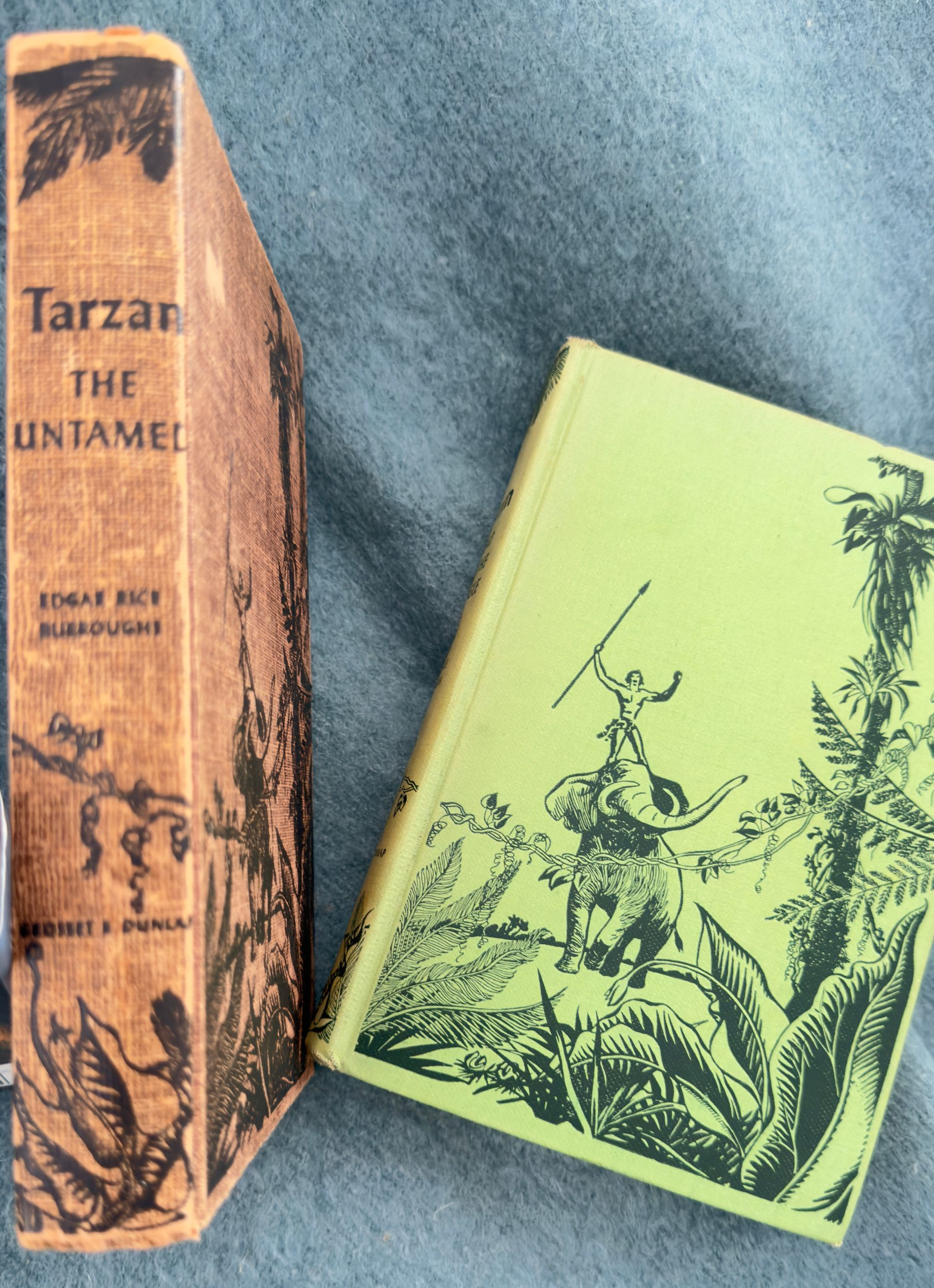
Suddenly, I wasn't sixty years old standing in a bookstore in Maine. I was a little girl again, watching the live-action Tarzan series on Saturday mornings. Africa. Jungles. Animals. Lost civilizations. Prehistoric lands. Adventure waiting beyond the next tree. I loved all of it.
Standing there holding those old books, I wondered something I had never really considered before. Was Tarzan partly responsible for what happened next?
Because at sixteen, that little girl who dreamed about Africa became a Rotary Exchange student and went to live in South Africa.
Maybe.
Memory is funny that way. We like to draw straight lines through our lives afterward when they were probably anything but straight. But I do know this: long before I had a passport, stories took me places. Eventually, I started following them.
As we traveled farther into Maine, I fell into a routine. If a town had a bookstore, I wanted to find it. We wandered through Fiction Bookshop in Wiscasset, Sherman’s, Owl & Turtle in Camden, and Arctic Tern in Rockland. And after the initial happy wandering that happens whenever I walk into a bookstore, I usually found myself in one of two places: the children's section or the local section.
The children's section probably needs no explanation. I am a children's writer, but more importantly, I think some part of me has simply never stopped believing that children's books are among the most important books we put into the world. The local section was different. I wanted to understand where I was.
September in New England felt almost storybook itself. Leaves were turning golden yellow and brilliant red. Pumpkins sat in fields and beside old houses. Roads wound along rocky coastline and through forests, past little towns and lakes and places where people had built lives very different from my own in Georgia. I didn't want simply to see Maine. I wanted to know something about it.
So I read.
I browsed local authors, histories, photography, fiction, memoirs and stories of people who had lived in those woods and worked along that coast. Somewhere along the way I realized that this, too, is one of the gifts of a bookstore. It can introduce you to a place in a way sightseeing alone never can.
One of my favorite discoveries came at Gulf of Maine Books in Brunswick , where I was introduced to Spoonhandle , Ruth Moore's bestselling 1946 novel about life on a fictional Maine island and the conflicts that arise when greed and outside interests begin changing a community.
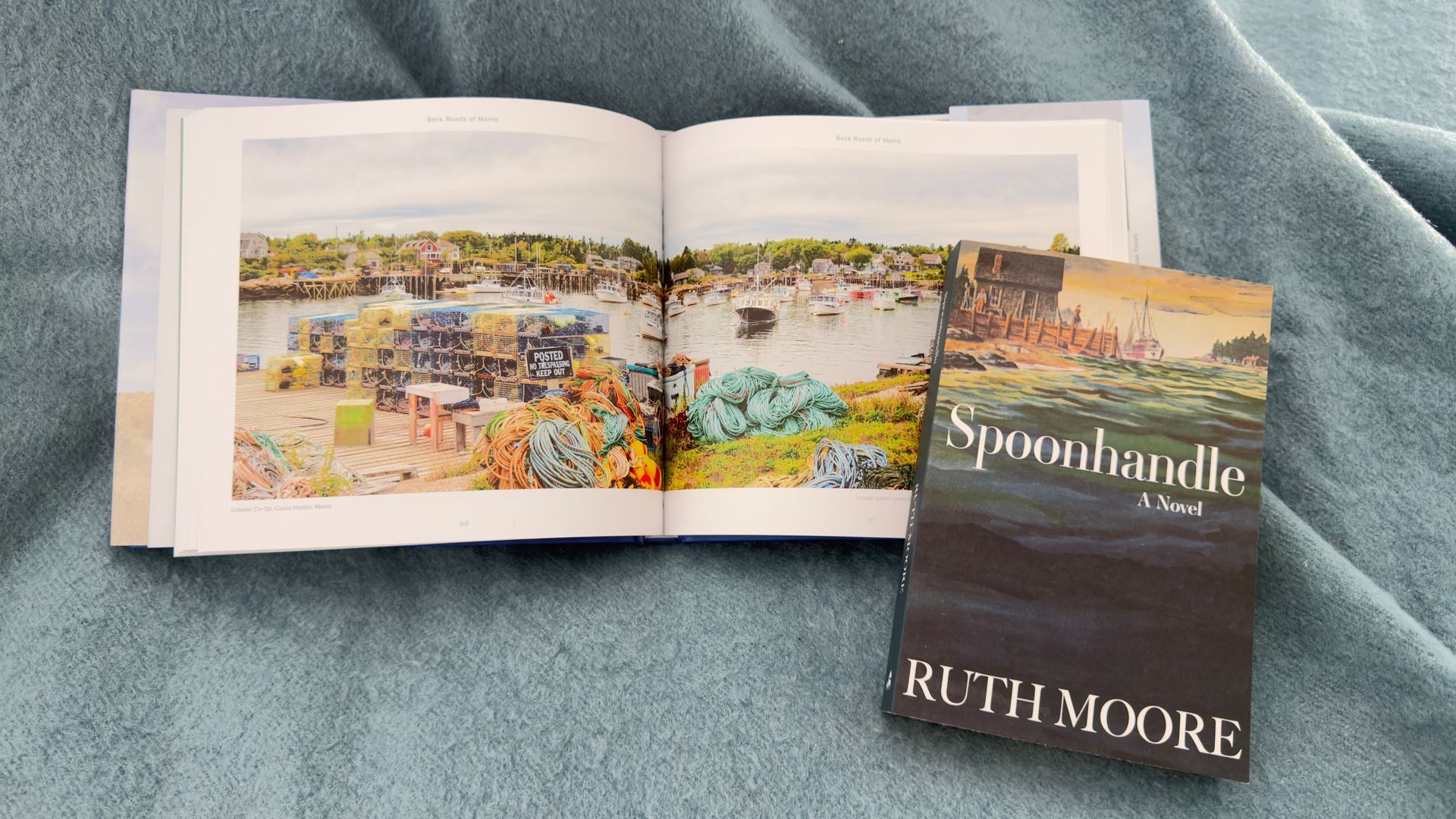
But this time, the book itself was only half the discovery.
The shop's owner—an older gentleman with a wonderful thick mass of gray hair and a long gray beard—began telling me about Ruth Moore. He had met her in the 1980s, and what began as an introduction became a friendship that lasted until her death in 1989. He had also been instrumental in helping bring her books back into print and, in doing so, keeping her voice and stories alive for another generation of readers.
I loved that.
Here I was, decades after Spoonhandle was first published, standing in a little bookstore in Brunswick, Maine, listening to someone who had actually known the woman who wrote it.
Suddenly Ruth Moore wasn't simply a name printed across the cover of an old novel.
She was a person.
And the man telling me about her wasn't simply selling books. He was helping preserve a story.
That conversation reminded me that independent bookstores offer something an online search never quite can. Their owners and booksellers know their shelves. They know their communities. They know which local writer you should read and which forgotten book deserves another look. And sometimes, if you're lucky enough to linger and listen, they know the stories behind the stories.
I walked through the door knowing nothing about Ruth Moore.
I walked out carrying Spoonhandle —and wanting to know more.
By the time we reached Rangeley, Maine had changed completely. The ocean and rocky coastline had given way to mountains, forests and enormous lakes. At Books, Lines & Thinkers, I discovered We Took to the Woods by Louise Dickinson Rich, her account of moving into the remote backcountry of Maine's Rangeley Lakes region. Here was the Maine I was standing in—beautiful, isolated, funny, difficult and wild—seen through the eyes of someone who had actually made a life there.
And then there were the Maine Game Wardens.
As a former Georgia Game Warden, there was absolutely no chance I was walking past those books.
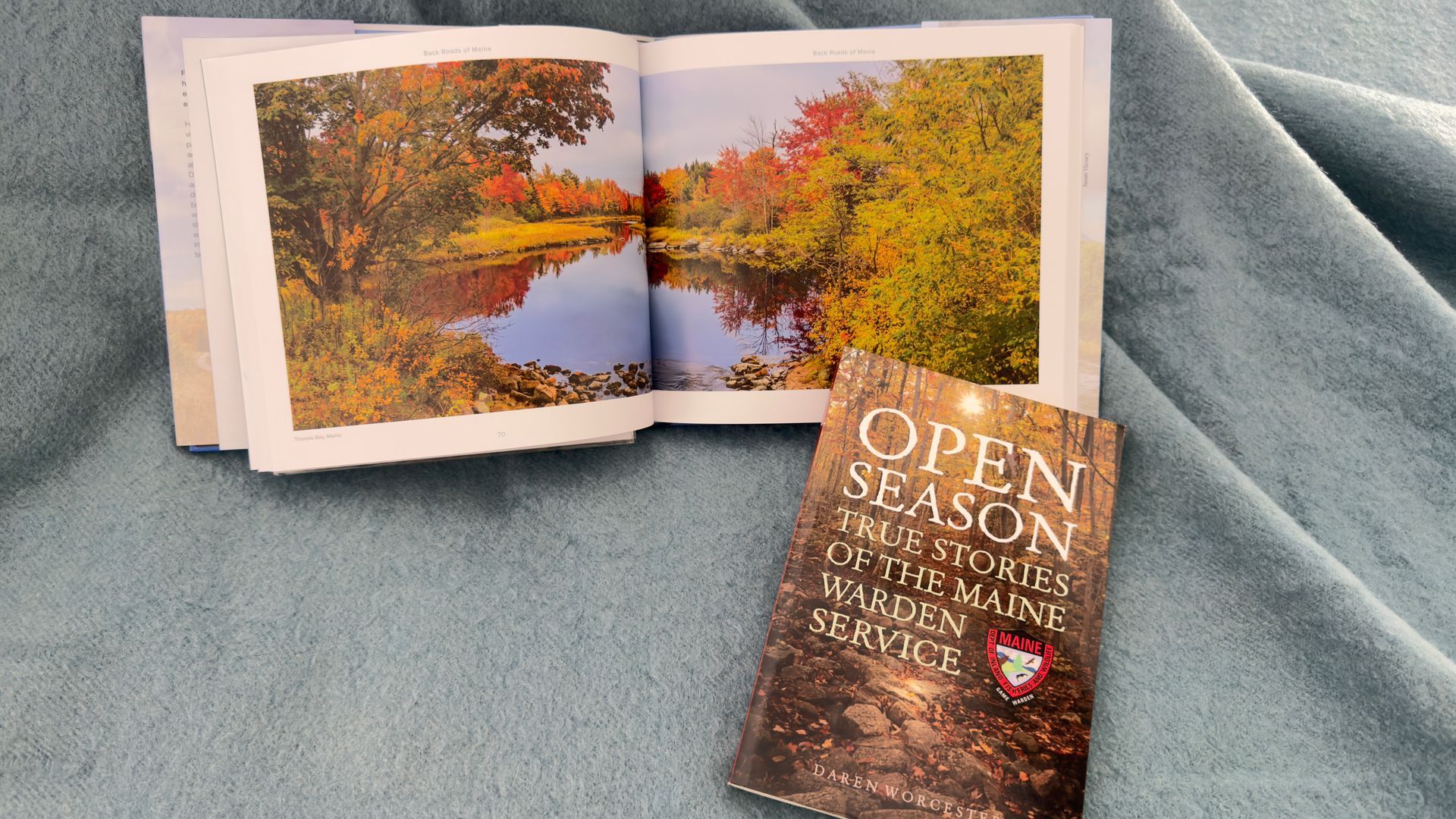
I found personal accounts from members of the Maine Warden Service, and suddenly the forests we were driving through looked a little different. These weren't simply beautiful woods. People had spent careers protecting the wildlife and searching those forests, lakes and mountains—sometimes under extraordinarily difficult circumstances.
Then, at the Outdoor Heritage Museum in Oquossoc, I met another woman.
Not literally, of course. Cornelia Thurza Crosby has been gone for many years. But that's another thing stories do particularly well: they allow us to meet people we otherwise never could.
Crosby, better known as “Fly Rod,” was born in 1854 and became Maine's first registered guide. She wrote about fishing and the outdoors and promoted the wild places of Maine at a time when women weren't exactly expected to make careers for themselves in either outdoor pursuits or journalism.
I was fascinated.
Maybe I have a particular weakness for women who go first.
I understand something about walking into a profession where nearly everyone who came before you was a man. I was the third woman hired as a Game Warden by the Georgia Department of Natural Resources. I know how much it matters to look ahead and see someone already standing where you're trying to go.
And then I found Fly Rod Was First , a children's book telling Crosby's story.
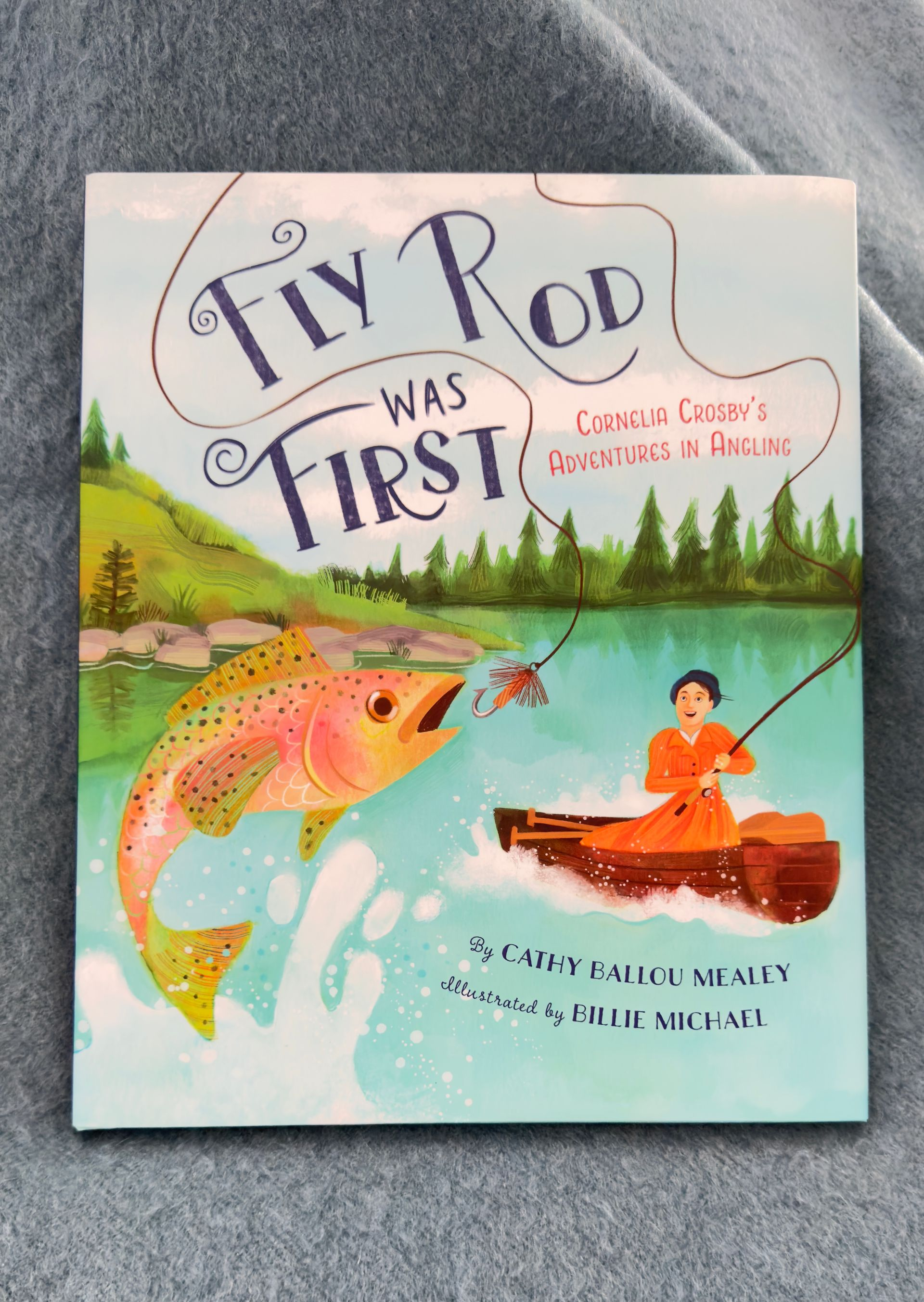
That stopped me.
Because somewhere, a little girl will open that book and meet Cornelia Crosby for the first time. Maybe she loves fishing. Maybe she loves animals. Maybe she loves writing. Maybe she simply sees a woman doing something unexpected and thinks, I could do that.
That is no small thing for a children's book to accomplish.
Our final bookstore treasure hunt came in Woodstock, Vermont. Pleasant Street Books occupies an old red barn, which already made it nearly impossible for me to resist. I climbed the stairs into the loft, saw shelves and shelves of old books neatly organized by category, and did what I have apparently done my entire life.
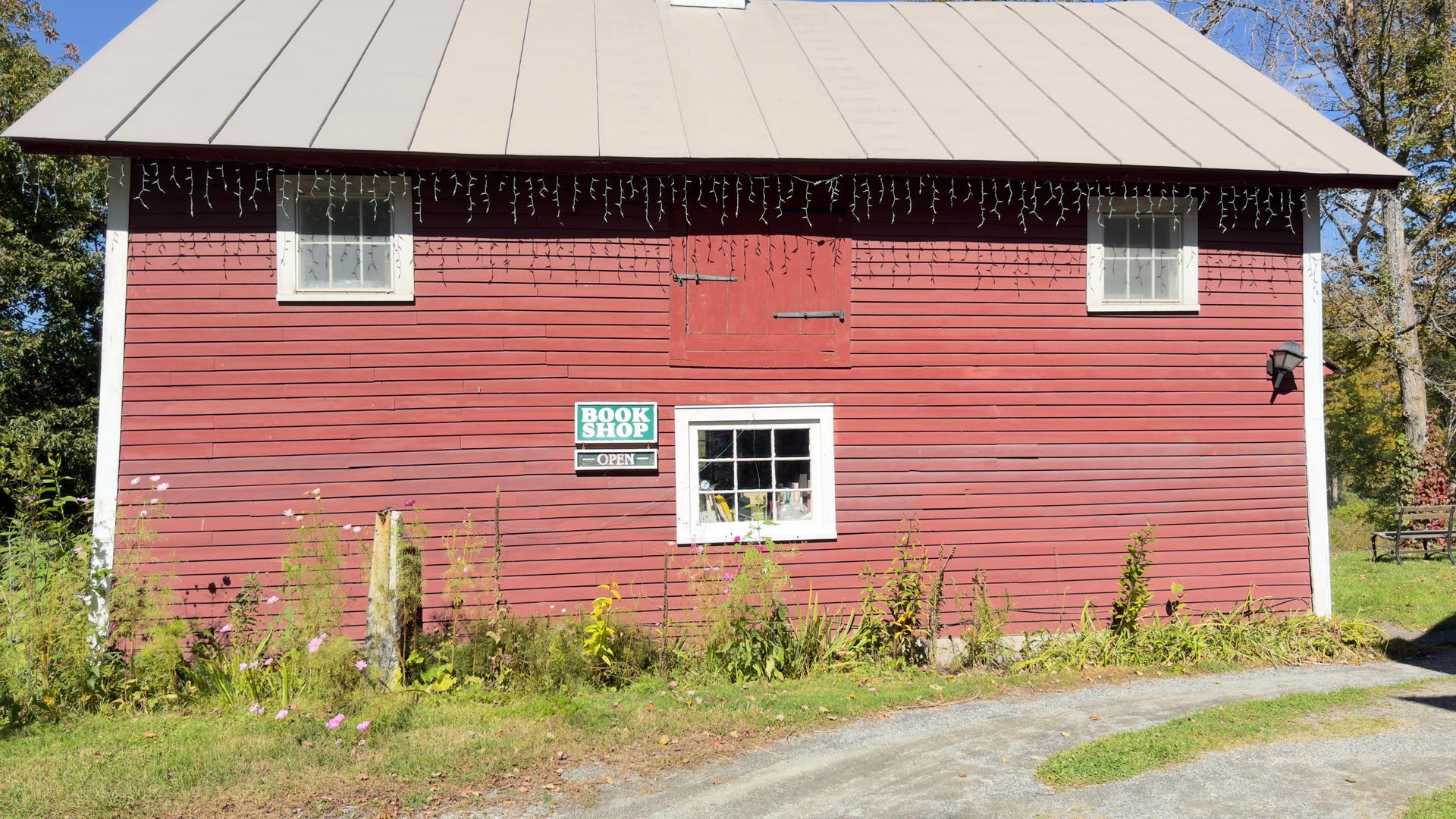
I headed straight for the children's books.
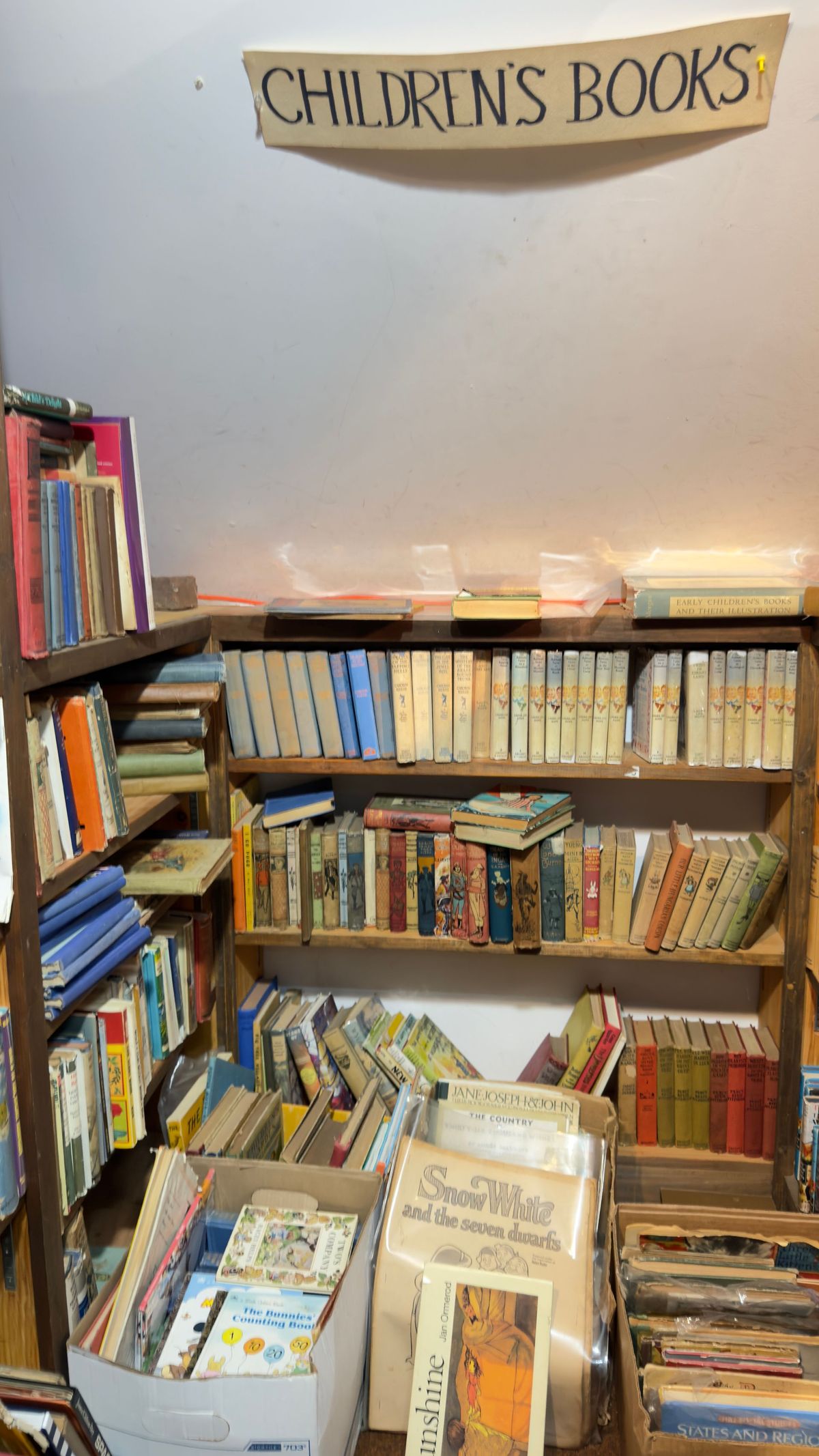
And there she was.
Marguerite Henry.
Henry wrote dozens of books, many centered around horses and other animals, and generations of children grew up with her stories. I was one of them. But seeing her books that afternoon didn't first make me think about authors or awards or publishing.
It made me think about my grandfather.
I can still see him sitting in his chair at the farm, reading chapters of Cinnabar to us at night. I remember his animated voice. I remember listening. And more than anything, I remember the feeling of those evenings—the comfort and peace of being together while someone I loved read us a story.
All these years later, that fox and those evenings are still part of me. In fact, Cinnabar became part of the inspiration behind the foxtail I now use in my own author identity.
That's the extraordinary thing about stories. We don't always know which ones are going to stay.
A book read to a child one evening can quietly take up residence in her heart and still be there more than fifty years later.
At Pleasant Street, I found copies of Henry's San Domingo: The Medicine Hat Stallion and Black Gold , the story inspired by the Thoroughbred who won the Kentucky Derby in 1924. Holding those books also reminded me how important Henry's collaboration with illustrator Wesley Dennis was. His horses didn't merely accompany her words. They helped create the world children entered.
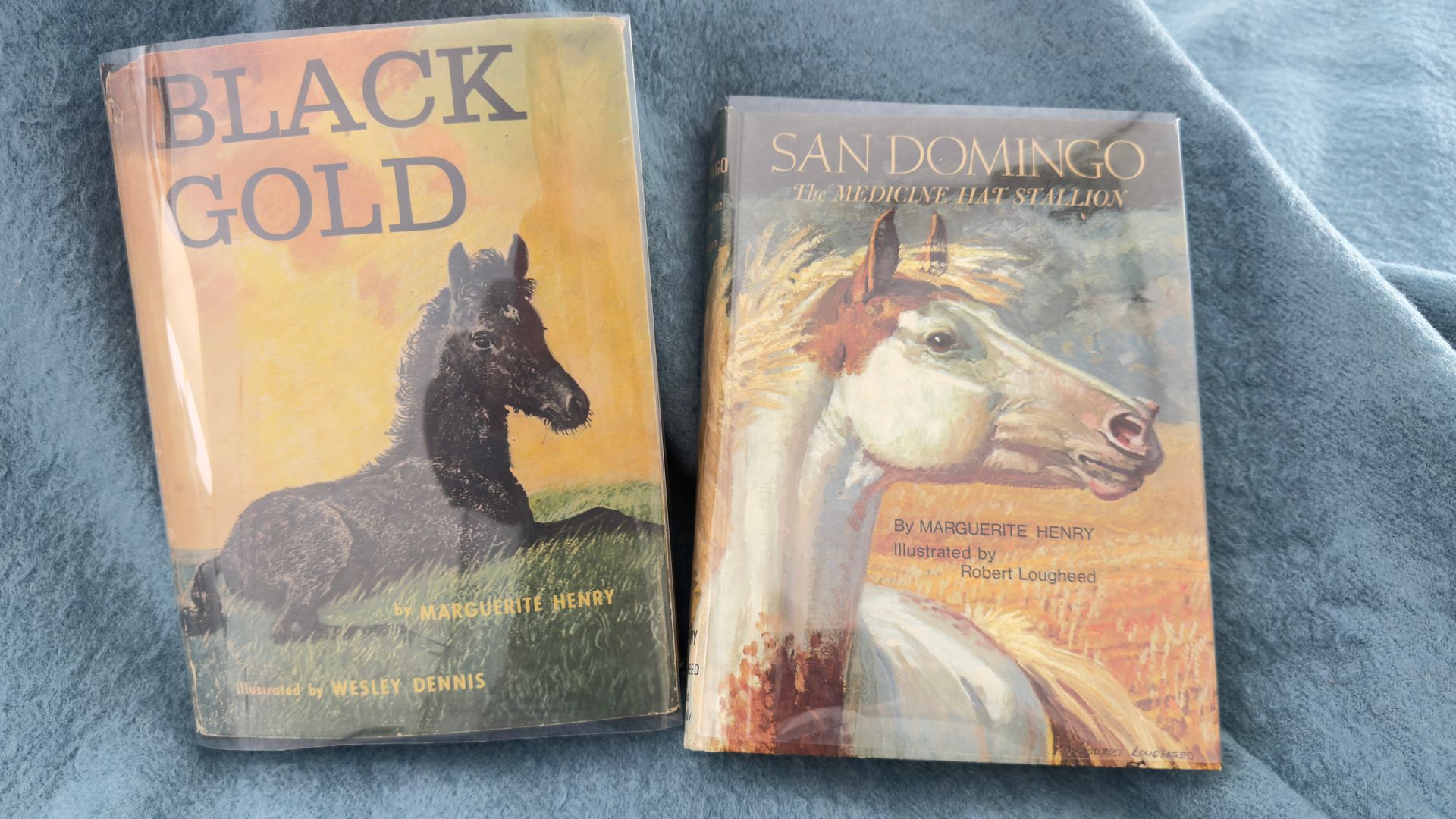
As a children's writer now, I understand that partnership differently. Words may tell a child where the door is. Illustrations can make that child desperate to open it.
Eventually—and thoroughly—I finished digging through the children's section and wandered over to Nature and Animals. That's where another book stopped me.
Feathered Friends of Field and Forest , published in 1928, was written by Eleanor E. Helme and illustrated by Barbara Briggs. I knew nothing about either woman. I picked it up because the illustrations were beautiful.
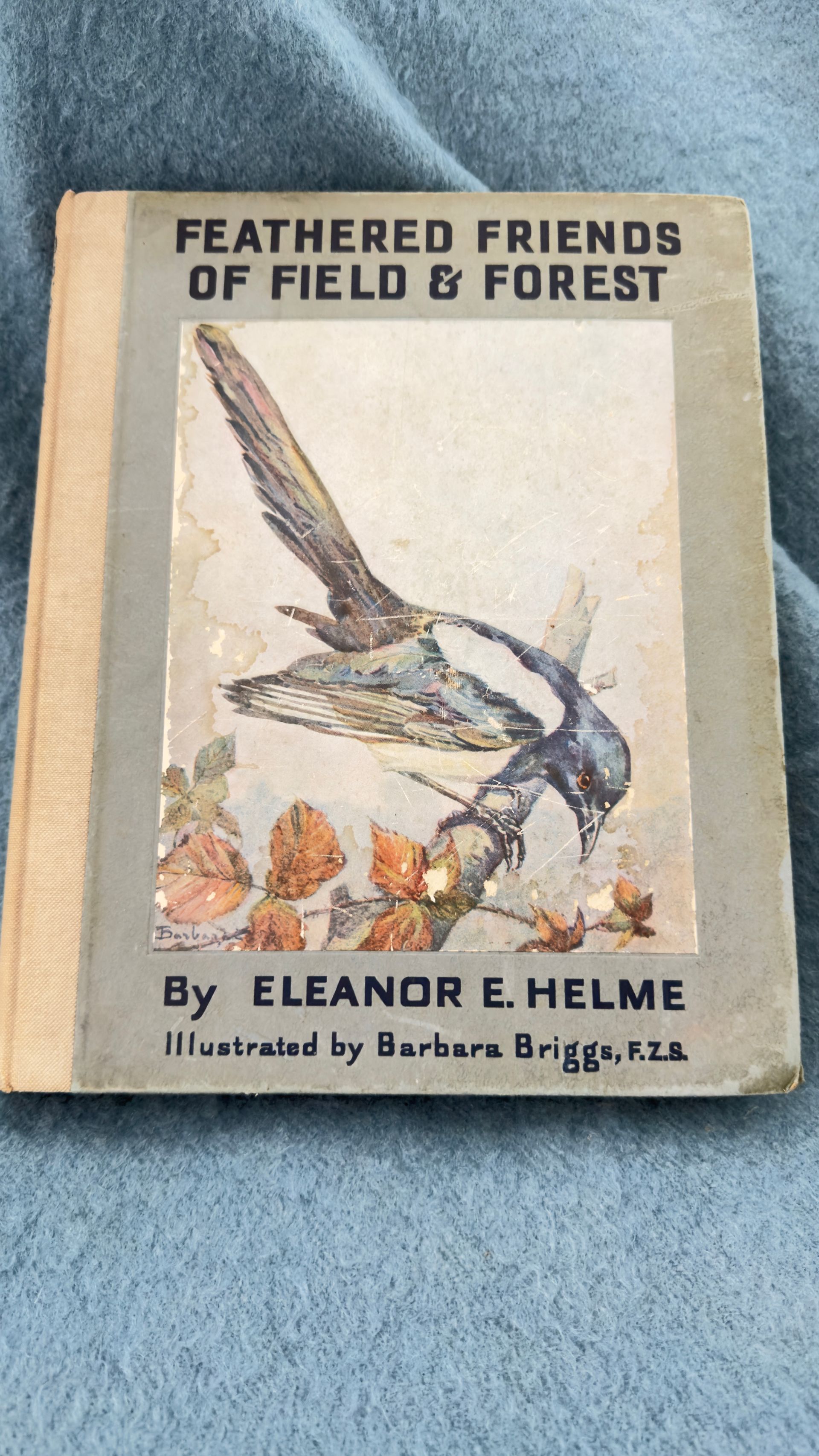
And then I became curious.
This is one of the occupational hazards of old bookstores. You go in looking for a book and come out with a woman born in 1887 whom you suddenly need to know everything about.
I discovered that Eleanor Helme wasn't simply a writer of nature and children's books. She was an accomplished golfer and became a pioneering golf journalist and broadcaster in an era when women weren't routinely handed microphones—or newspaper columns. Later she wrote books about ponies, farming, nature and wildlife.
Another woman who went first.
And now, because one old illustrated bird book caught my eye in a barn in Vermont, I'm searching for another Helme title, Friends of Field and Forest.
One treasure hunt has created another.
Perhaps that is what I love most about bookstores. You rarely know where they are going to send you.
Fourteen states and thousands of miles later, we finally pointed the Tahoe toward home. We came back with dirty hiking shoes, three very well-traveled dogs, memories of mountains and whales and lighthouses, probably some Maine sand in places Maine sand should never be—and a considerably heavier collection of books.
But I don't think I've ever brought home just a book .
I brought home Tarzan and found the little girl who spent Saturday mornings dreaming about Africa.
I brought home Marguerite Henry and found my grandfather again, sitting in his chair at the farm.
I discovered Eleanor Helme and Cornelia “Fly Rod” Crosby—two women I had never known before this trip—whose stories reminded me that every generation has people willing to step through doors that haven't been opened very often before.
I discovered Ruth Moore because a bookseller who had known her made sure her stories weren't forgotten.
And I brought home books about Maine that allowed me to understand a little more deeply the beautiful place through which we'd been traveling.
Maybe that's why I will always search for the little bookstore when I arrive somewhere new.
A bookstore isn't simply somewhere to buy something to read. It's a treasure hunt. You never quite know what you're looking for when you walk through the door—or where what you find might eventually lead you.
One old book leads to another. One writer introduces you to another. A story written nearly a century ago sends you searching for a woman you've never heard of. A conversation with a bookseller introduces you to an author whose voice he has helped keep alive. A children's book transports you back to your grandfather's chair. And a fictional boy swinging through an African jungle might just plant a tiny seed of adventure in a little girl who will someday cross an ocean.
Books do that.
They can open a door to another place. Another person. Another way of seeing the world. Sometimes even to a part of ourselves we haven't met yet.
Open a book. Open a mind. Open a heart. Open a world.
I'll keep looking for the bookstores.
There are still so many doors I haven't opened yet.